Cyclone season in Mauritius, and the two seasons of the island
Published · Updated · The Villa Mauritius
The official cyclone season in Mauritius runs from 1 November to 15 May, with the highest risk from January to March. Most weeks pass without a cyclone; when one approaches, the Mauritius Meteorological Services warn days ahead and the island stops for a day or two. Here is how it works, and how the two seasons of the island feel from the north coast.
01
The two seasons in short
The Met service counts summer from November to April and winter from June to September, with May and October as transition months. In the north, summer means 30 to 31 degrees by day and 19 to 22 at night, humid, with short heavy showers and the sea at 25 to 28 degrees. Winter means 26 to 27 by day and 16 to 17 at night, drier, with the sea at 23 to 25. The north and west are in the lee of the central plateau and get less rain than the centre, the south and the east. The villa's air conditioning and ceiling fans matter in summer; in winter a light jumper for the evening is enough.
02
January to March: hot, green, and the cyclone window
The hottest and wettest months, and the greenest: the island after the rains is spectacular. Mornings are usually bright, afternoons bring a downpour that lasts an hour, evenings are warm. The sea is at its warmest and the lychees and mangoes are in season. This is also the cyclone window. Most years nothing comes near; some years an alert closes the island for a day or two. February is the wettest month in the north and had the fewest visitors of 2025.
03
April and May: the end of summer
The rains ease, the heat softens, the sea is still 27 degrees and the island is still green. April is summer with less rain; May brings the end of the cyclone season on 15 May and low-season prices. The European Easter holidays fill the hotels; outside those two weeks the beaches are quiet. For golfers, May opens the season of dry fairways.
04
June to September: winter, dry and bright
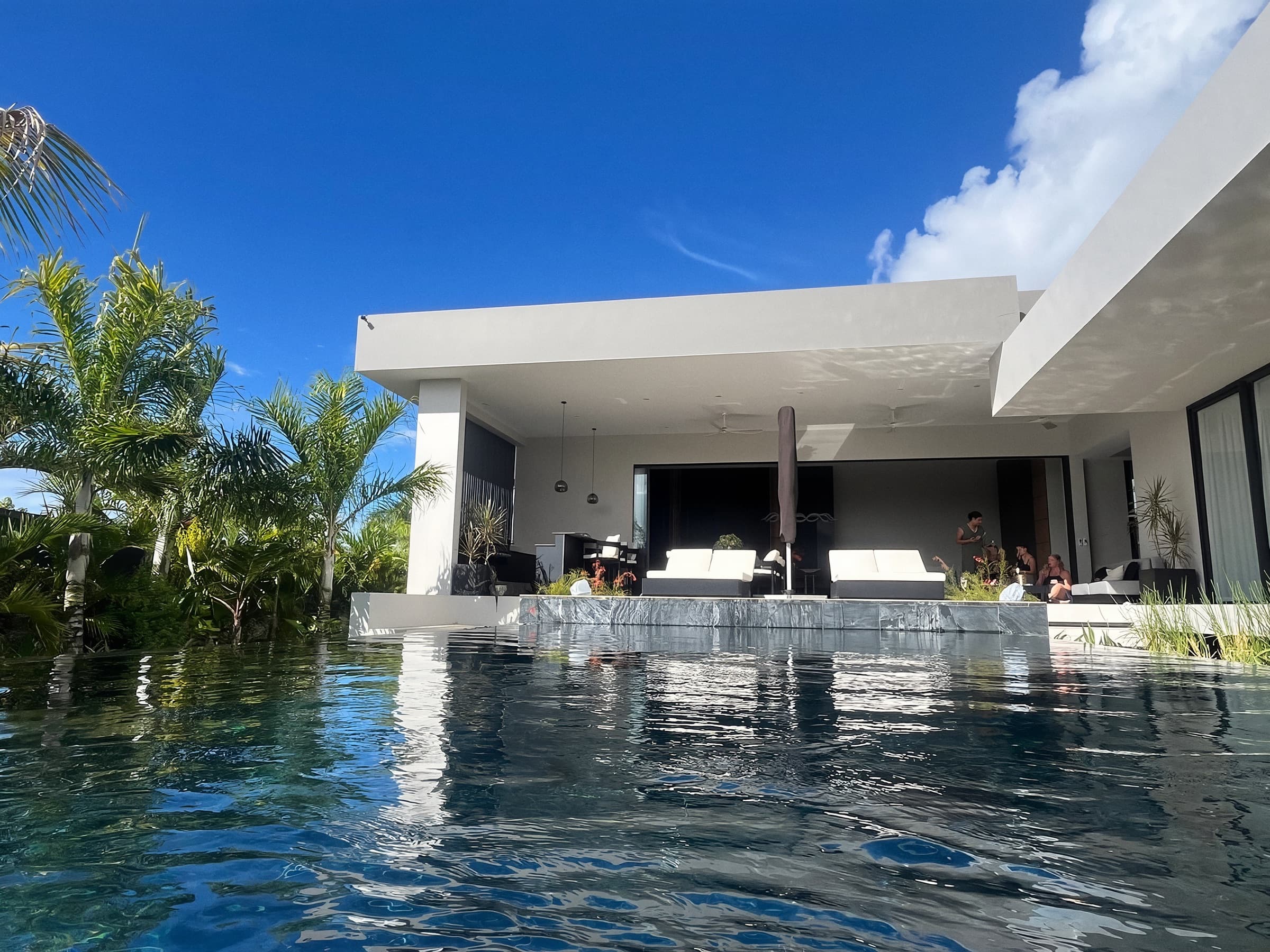
Winter here means 26 degrees and sunshine. The trade winds blow from the south-east and can be strong on the east coast; the north, where the villa is, is sheltered and the lagoon stays calm most days. Evenings cool to 18 or 19 degrees, pleasant for dinner outside with a light layer. The sea is at its coolest, 23 to 24, which still beats most of Europe in August. Humpback whales gather off the west coast from July to October. Rates are at their lowest.
05
October to December: the sweet spot before the crowds
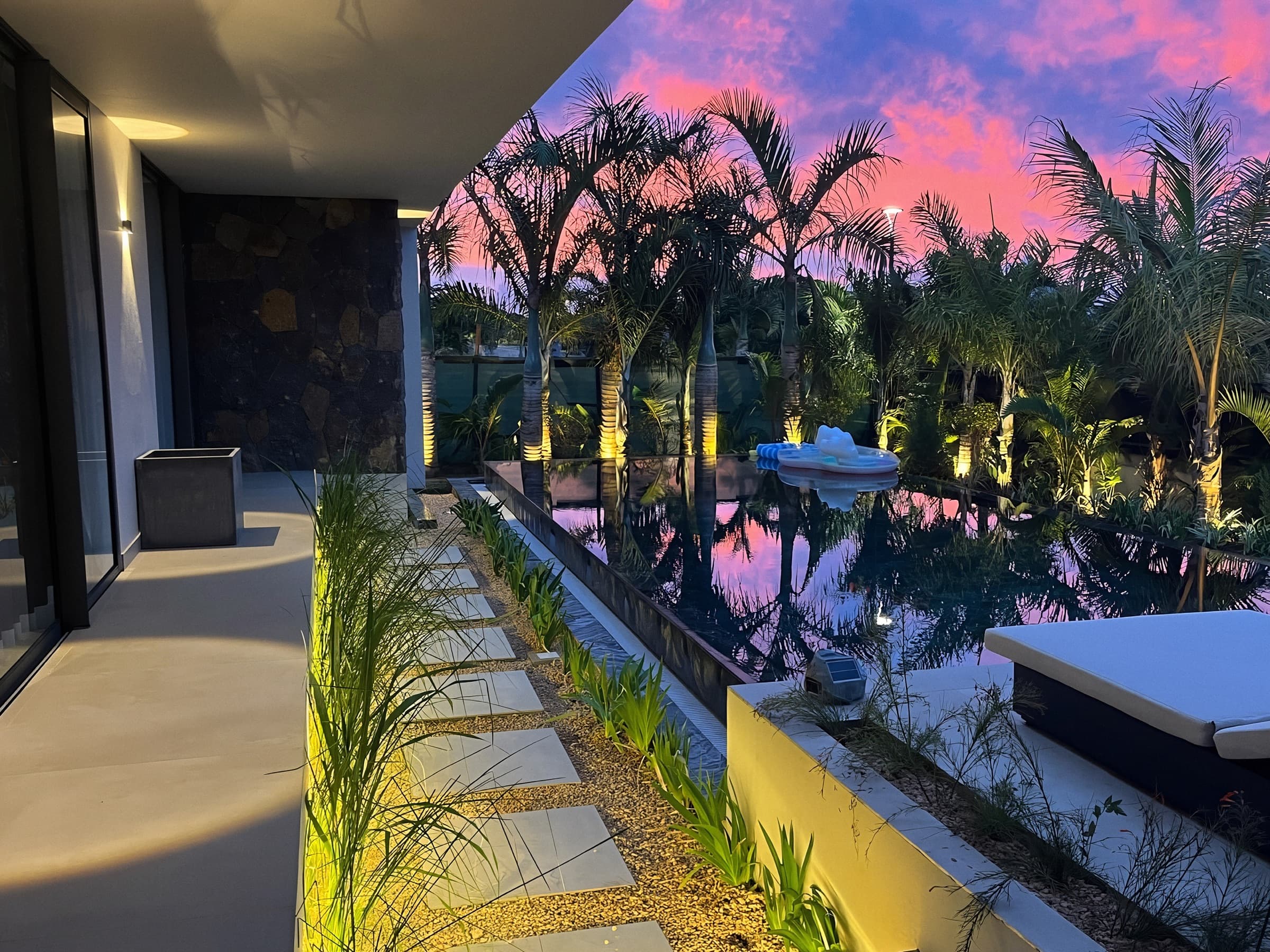
October and November are dry, warm and calm: the sea warms back to 26, the wind drops, the flamboyant trees flower red in December. October is the driest month of the year for the island and November the sunniest in the north. Rates rise from mid-December for the festive period, which is hot and busy; book early for Christmas and New Year.
06
Cyclones: what actually happens
The official season runs from 1 November to 15 May, with the highest risk from January to March. The Mauritius Meteorological Services issue warnings in four classes built around one threshold, gusts of 120 km/h: the higher the class, the closer the threat, from Class I, issued well ahead, to Class IV. The whole island follows them: at the higher classes shops and offices close, everyone stays home, and the alert is lifted a day or two later. Houses here are built in concrete for it. In practice a cyclone costs a holiday one or two days indoors, with the cinema and the games room, and a very green garden afterwards. Travel insurance that covers weather disruption is sensible for January to March, as it is for the Caribbean in September.
07
What to pack by season
Summer: light clothes, a rain jacket that folds, mosquito repellent, high-factor sunscreen, a hat. Winter: the same plus a light jumper or jacket for the evenings and a long-sleeved shirt for the boat. All year: reef shoes, a rash vest for snorkelling, sunglasses. The villa provides bath and pool towels.
Staying in Mont Choisy
The Villa Mauritius is a private four-suite villa for eight guests inside the Mont Choisy Le Golf estate, a few hundred metres from the first tee and three minutes from the beach.
FAQ
Questions about this
What is the best month to visit Mauritius?
May, October and November for the balance of warmth, dry weather and calm. June to September for golf and the lowest rates. December to April for the heat and the warmest sea, in cyclone season.
When is the cyclone season in Mauritius?
Officially from 1 November to 15 May, with the highest risk in January, February and March. Most years no cyclone hits the island directly; warnings come days ahead.
Is the north of Mauritius rainier than the south?
No, the opposite. The north and west are in the lee of the central plateau and get the least rain; the south and east face the trade winds.
Can you swim in winter in Mauritius?
Yes. The sea is 23 to 25 degrees from June to September, and the north coast is more sheltered from the trade winds than the east and south.